
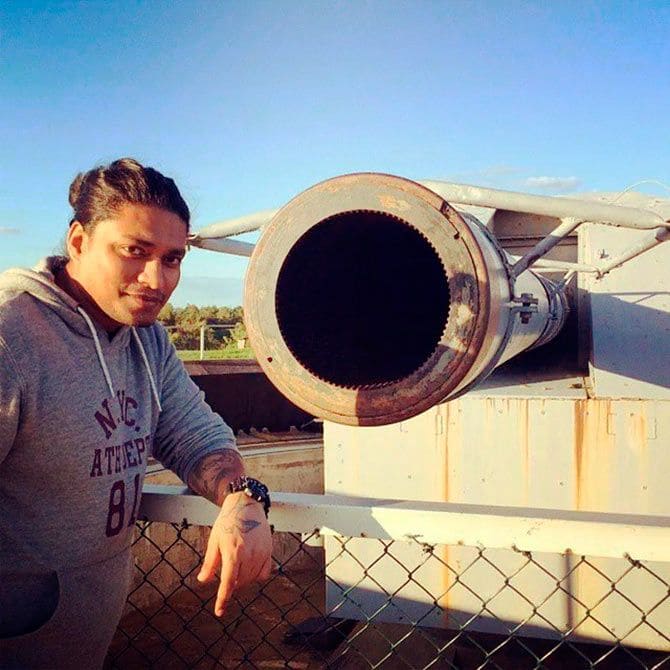
The Indian tattoo artist Abhinandan Basu made it onto the list of the 100 best tattoo artists in the world and made a name for himself.
Abhinandan Basu or ‘Obi’, as his tattoo signature is called, is one of the three Indian artists depicted in the ‘The World Atlas of Tattoo’ published by Yale University Press.
The book brings together the 100 best tattoo artists from all over the world, including Abhinandan (Calcutta), Mo Naga (Nagaland) and Manjeet Singh (Delhi) from India.
The author of the book, the American tattoo historian Anna Felicity Friedman, wanted to include artists from all over the world who represent many types of tattoo cultures and styles, many of which have not been recognized enough.
The Indian tradition of tattooing seems to be one of them. But the anonymity stops here, because these three artists have brought Indian tattoo culture to the international stage.
We had the opportunity to talk to one of these artists, the 30-year-old Abhinandan Basu from Calcutta, who gave us interesting insights into his own career as a tattoo artist and the industry in general.
When did you start tattooing and what inspired you to become a tattoo artist?
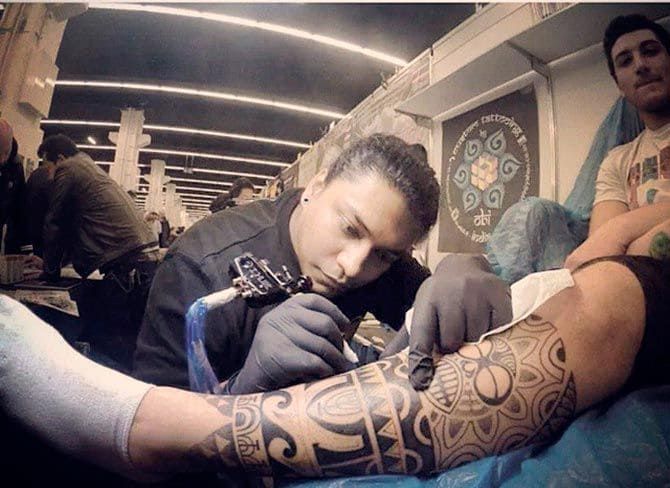
I started tattooing at the end of December 2007. I studied at Ramaiah College in Bangalore and got my first tattoo there. At that time I knew that I wanted to be a tattoo artist and nothing else. My friends, who are also tattoo artists, have a different job and can do both. But I’ve never landed in a conventional job and have been tattooing ever since.
When did you start your own studio?
I never did that. I didn’t have one, although I had a private studio in Calcutta for a while where I worked. But after that I traveled around and tattooed on the way. First I went to Mumbai, where I studied tattooing for two years, then to Pune, and finally I also traveled to Europe.
Your specialty is dot work. Can you tell us more about it? Any other style of work you are coming up with?
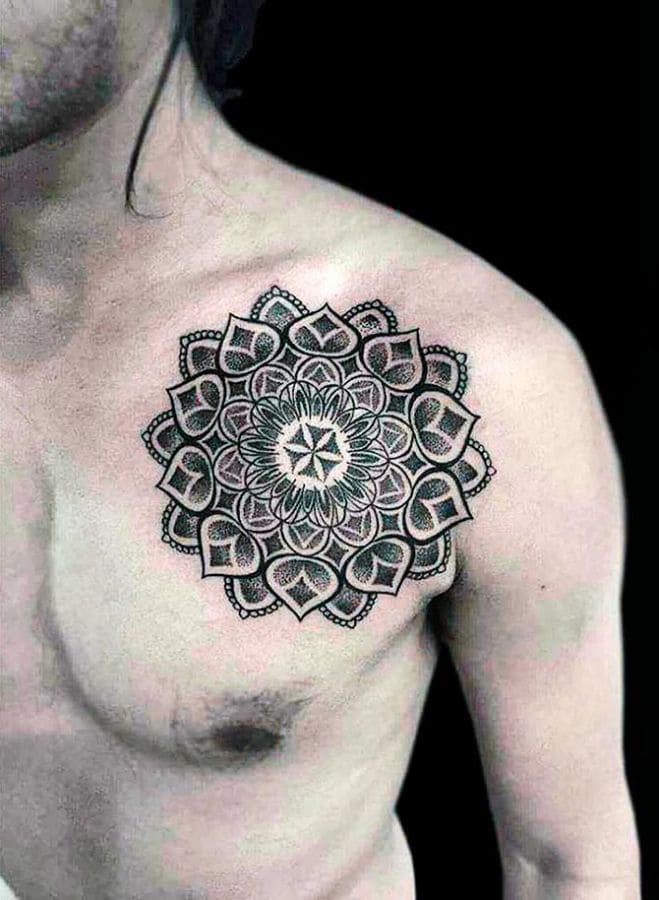
I started with two styles. The first was the full color dot mandala, where I modified the conventional point work influenced by both Western and Eastern cultures. In this species, I used sacred geometry to create certain optical illusions.
The other and newer variant is the bongo style, which is based on the Bengal folk art. I customized these designs and made them tattooable. I also work on portrait tattoos based on semitones.
What your initial reaction when you found out that you have been featured amongst top artists in the field?
I am very happy about it, because this draws international attention to Indian tattoo styles. In fact, people abroad were often surprised to learn that we tattooed in India and that this art also exists in our country. So not many people know that this art is also flourishing in India.
I also have no illusions about being one of the greatest tattoo artists; There were many others. I don’t think art has any rank. Even the other two artists from India, Mo Naga and Manjeet, are my friends. In fact, two weeks ago I got a tattoo of Mo Naga myself and I think both are great artists.
What is the opinion of the people outside of India about Indian designs? Do you like her?
To tell the truth, you like our tattoo designs more than we do here. They are grateful and love to get tattooed in our style and always look eastward with awe. It’s the same with us, we tend to imitate them and are fascinated by them. But in Indian tattoos there is a lot to experiment because it offers a versatile palette. There is no point in imitating; We have to create our own style.

What is the Indian attitude towards tattooing? Did you encounter resistance to tattoo culture in India?
To tell the truth, you like our tattoo designs more than we do here. They are grateful and love to get tattooed in our style and always look eastward with awe. It’s the same with us, we tend to imitate them and are fascinated by them. But in Indian tattoos there is a lot to experiment because it offers a versatile palette. There is no point in imitating; We have to create our own style.
India is a country in the country. If you go to a village where everything is tattooed, you probably won’t be welcomed, but the townspeople have accepted tattooing and are thrilled like never before. When I started in 2007, everything from procuring material to setting up a studio was difficult, as not many knew of these things. But now that’s all changed, and you get your tools within two days, and a lot more people have accepted the system. So a lot has changed in a short time. Personally, I didn’t encounter any resistance in India.
